
If you have called around for plaster sand in Islamabad or Rawalpindi and heard “not this week”, you are not imagining it. A Ghazi sand shortage is usually short-lived and almost always has a clear cause at the source or on the road. This guide explains why supply tightens, how to tell a real shortage from a road delay, how a weight limit decides how much sand one truck can carry, and how the delivered cost is built up.
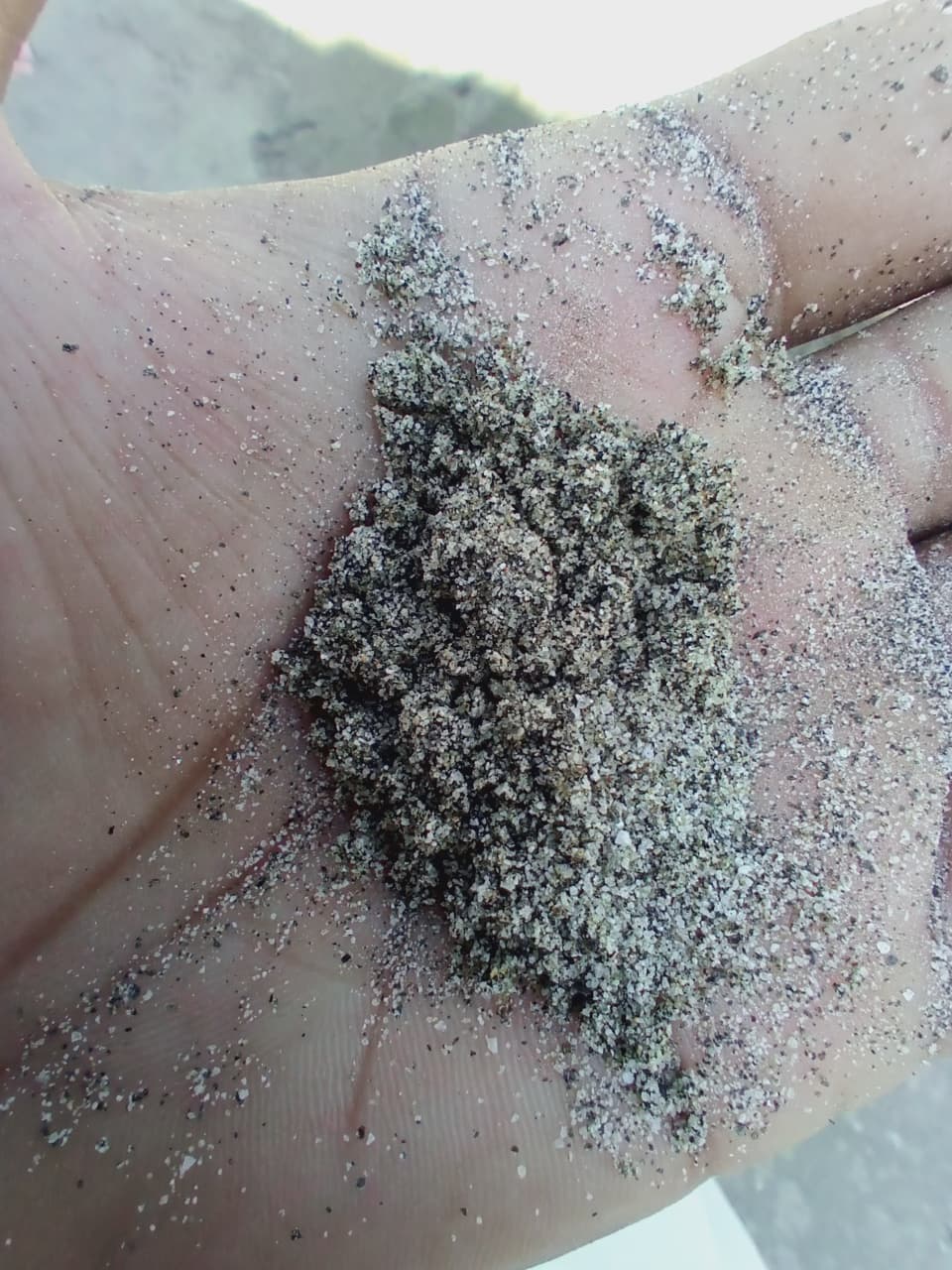
Quick answer: Ghazi sand supply tightens when loading at the source pauses, when roads, fuel or heavy-vehicle rules disrupt transport, and when many projects need sand at once. Delays usually pass. The best protection is to estimate your quantity early, book before plastering starts, and take larger orders in phases.
Terms used here: the ex-mine price is the cost at the mine gate before transport. The delivered price is what you pay at your site after freight and other transport costs. CFT means cubic foot, the standard unit sand is measured and priced in across Pakistan.
Contents
- How can you tell whether Ghazi sand is really short?
- Why does a Ghazi sand shortage happen?
- How a pause at the mine reaches your site
- From mine to site: how the cost builds up
- What you can do about it
- Frequently asked questions
- Final word: plan ahead
How can you tell whether Ghazi sand is really short?
Not every delay is a shortage. Supply at the source, trucks reaching your area, and the delivered cost for your site are three different things. If you are new to the material, start with what Ghazi plaster sand is, then ask these three questions in order:
- Is sand being loaded at the source? A pause at the pit affects every buyer.
- Can trucks reach your area? Closures and heavy-vehicle restrictions can stop trucks even when loading is normal.
- What is the delivered cost for your site? Distance, fuel and freight change the price even when supply is fine.
A guide cannot confirm live stock or today’s delivery times, because those change hour to hour. It can tell you which question to ask, so a short phone call gets a useful answer.
Why does a Ghazi sand shortage happen?
There is rarely a single cause. Usually two or three stack up. The first five below are general patterns in natural-material supply chains in this region, not a report of one specific event.
Landslide and safety pauses
Mining a natural earth face carries the risk of ground movement. When the ground looks unstable, loading stops until the area is safe. This is a safety decision, not a commercial one. While it lasts, trucks wait or leave empty, and the gap shows up at city yards later.
Rain and mud
Rain washes mud and topsoil into the working area, so the top layer has to be cleared before clean material can be loaded. It also makes the final unpaved stretch of the access route slow for loaded trucks (our mine location and route guide describes it). Loading usually restarts once the area is clear and the material is checked.
Diesel availability
Loaders and dumpers run on diesel. When fuel is hard to find, machines and trucks slow down or sit idle, and a fuel problem anywhere from the pit to your street slows the whole delivery.
Road closures and rallies
The mine is in Khyber Pakhtunkhwa and most loads travel toward Punjab and the twin cities. Marches, sit-ins and security arrangements sometimes close highways or restrict movement between provinces. One day of blockage can leave a queue behind it for much longer.
Heavy-vehicle restrictions, VIP movement and match days
Heavy vehicles are the first to be stopped when a city tightens security. Visits by dignitaries and delegations can close roads or keep heavy transport out of Islamabad for hours, and heavy-vehicle entry is limited at certain times. In Rawalpindi, traffic plans for international cricket matches have banned heavy traffic around the stadium and closed Double Road, as in this past match traffic plan. A dumper can be held back even when the mine is loading normally.
Why loaded sand trucks usually cannot use the motorway
Weight limits for national highways and motorways come from the National Highways Safety Ordinance, 2000 (NHSO-2000), which penalises driving heavy vehicles above specified weights, as The Friday Times explains. Weigh stations enforce it, and enforcement has tightened in recent years.
As commonly applied, a 10-wheeler is allowed about 27.5 tonnes total weight on a motorway, against about 34.5 tonnes at GT Road weigh stations. “Total weight” is the truck’s own weight plus the load. These are the limits as commonly described. The authorities set and revise them, so confirm the current figure with the motorway police or the relevant weigh station.
Sand capacity in CFT = (permitted total weight − truck’s empty weight) ÷ weight of one CFT of sand
Worked example with assumed figures, for illustration only: an empty truck of 11 tonnes and dry sand at 40 kg per CFT.
| Where the limit applies | Permitted total weight | Space left for sand (11-tonne truck) | Sand at 40 kg per CFT |
|---|---|---|---|
| Motorway | 27.5 tonnes | 16.5 tonnes | About 410 CFT |
| GT Road weigh station | 34.5 tonnes | 23.5 tonnes | About 590 CFT |
A lighter truck or drier sand carries more, so a motorway load of roughly 400 to 450 CFT is possible in the best case. A heavier truck or damp sand carries less, because wet sand weighs more per CFT. The weigh station, not the CFT figure on a delivery slip, decides what is allowed. Motorway tolls for trucks are also several times higher than national highway tolls under the NHA’s published schedule, so loaded sand trucks stay on GT Road, and when GT Road is restricted there is no easy second route.
Waves of demand
When many projects in the twin cities reach the plastering stage in the same weeks, orders bunch up and a small dip in supply feels much bigger than it is.
How a pause at the mine reaches your site
- Loading pauses at the mine because of a safety stop, rain, fuel, a closure or a formality.
- Trucks queue and fewer loads leave that day.
- Fewer loads reach the twin cities, so stock at yards and suppliers falls.
- Deliveries are rescheduled and new orders are served after earlier ones.
- Your plastering start slips, unless you booked ahead.
That is why people who book early often barely notice a shortage, while people who call on the day the masons arrive feel all of it.
From mine to site: how the cost builds up
Sand is priced by volume, in CFT. The figures below are an example of the method as of October 2026. Rates move with fuel, freight, distance and road conditions, so use this to understand how cost is built up, not as a quotation.
| Cost stage | Example rate | What it includes |
|---|---|---|
| Ex-mine price | PKR 50 per CFT | Sand, loading, royalty, chungi and lease charges at the source |
| Delivered price, normal conditions | PKR 125 to 135 per CFT | Freight, fuel surcharges, checkpost taxes and dealer margins |
| Delivered price, during a shortage | PKR 130 to 138 per CFT | The same costs, with higher freight and fuel when loading or roads are disrupted |
Loads of 400 to 450 CFT are the size a truck can carry within the motorway weight limit, and 550 to 600 CFT loads are commonly dispatched on GT Road.
| Truck load | Ex-mine cost at PKR 50 per CFT | Delivered cost at normal rate, PKR 125 to 135 per CFT | Delivered cost during a shortage, PKR 130 to 138 per CFT |
|---|---|---|---|
| 400 CFT | PKR 20,000 | PKR 50,000 to 54,000 | PKR 52,000 to 55,200 |
| 450 CFT | PKR 22,500 | PKR 56,250 to 60,750 | PKR 58,500 to 62,100 |
| 550 CFT | PKR 27,500 | PKR 68,750 to 74,250 | PKR 71,500 to 75,900 |
| 600 CFT | PKR 30,000 | PKR 75,000 to 81,000 | PKR 78,000 to 82,800 |
The gap between the two columns is not a hidden charge. It is freight, fuel, checkpost costs and the dealer’s margin. Those move with the distance to your site and the week’s road conditions, which is why a shortage and a price change often arrive together.
For today’s area-wise delivered rates, see Ghazi sand rate per cft, dumper and trolley. To understand why delivered prices rose in 2025, read sand price in Islamabad.
What you can do about a Ghazi sand shortage
You cannot control rain or highway closures, but you can control how exposed your project is to them.
1. Work out your quantity before you call
A rough guess leads to a second order and a second wait. Use our guide to estimate how much plaster sand you need from wall area, plaster thickness and mix ratio, with a modest allowance for wastage.
2. Book before plastering starts
Call while brickwork is still going up, not when the masons are standing around. Delivery depends on loading and road conditions nobody can promise in advance, so lead time is your real protection.
3. Take larger orders in phases
For a big house or commercial job, two or three deliveries are often better than one. The sand stays cleaner on site, and a delay in one load does not stop the whole job.
4. Get the site ready for the truck
Check that a dumper can reach the unloading spot, that the spot is a hard, clean surface, and that you can cover the pile if rain is forecast.
5. Plan the work around the wait
If a delivery slips, move other jobs forward: surface preparation, fixing and checking walls, or finishing work that does not need sand. An idle crew is the most expensive part of any delay.
6. Be careful if you have to switch sand
Do not assume another sand behaves the same in your mix. Ask for its test information, try it on a small area first, and get your engineer or consultant to approve it. Our guide to sampling, sieve analysis and laboratory reports explains what to ask for.
7. Do not over-order to be safe
Stored sand gets wet, mixes with soil and is wasted. Order to your estimate plus a modest allowance and take the rest in phases.
8. Keep up with what moves trucks
Most delays show up in the news first: planned marches and rallies, match days at the Rawalpindi stadium, dignitary visits and fuel price announcements. A closure can restrict GT Road at short notice, and an expected diesel increase can raise the freight and fuel part of the delivered cost. Ask any supplier how long a quote stays valid.
9. Ask suppliers directly, and ask more than one
Rates and loading conditions change faster than any article. Call two or three suppliers and ask what is loading, what the delivered cost is for your site and how long the quote is valid.
Frequently asked questions
How can I tell if Ghazi sand is really short right now?
A guide cannot confirm live stock. Ask three separate questions: is sand being loaded at the source, can trucks reach your area, and what is the delivered cost for your site. A pause at the pit, a road restriction and a price change are different problems.
How long does a shortage usually last?
There is no fixed length. A short safety pause or match-day restriction is very different from a multi-day highway closure. Ask your supplier for the current position when you book.
Why is the delivered cost so much higher than the ex-mine cost?
In the example used here, ex-mine is PKR 50 per CFT and delivered is PKR 125 to 135 in normal conditions, rising to about PKR 130 to 138 during a shortage. The difference covers freight, fuel surcharges, checkpost taxes and dealer margins, which depend on your distance and the week’s road conditions.
Why don’t loaded trucks use the motorway when GT Road is closed?
The motorway weight limit is lower than at GT Road weigh stations, and a fully loaded sand truck usually exceeds it. Motorway tolls for trucks are also several times higher. A GT Road closure therefore usually means waiting or a longer detour.
How much sand can a 10-wheeler legally carry?
Subtract the truck’s empty weight from the permitted total weight, then divide by the weight of one CFT. With an 11-tonne truck and dry sand at 40 kg per CFT, that is about 410 CFT within a 27.5-tonne motorway limit and about 590 CFT within a 34.5-tonne GT Road limit. Confirm current limits before relying on this.
Can I use a different sand for plastering while Ghazi sand is short?
Only after checking it. Ask for its test information, trial it on a small area, and have your engineer or consultant approve it.
Can I visit the mine to check the situation myself?
You can, but contact the supply office first. The final stretch is not like a highway, and a loading pause may mean there is little to see. See the mine location and route guide.
Does the sand change when supply is tight?
Quality is monitored through the sampling routine described in our lab guide, and a laboratory report applies only to the sample it describes. If your project needs verification, ask for the test information before you confirm an order.
Final word: plan ahead
A Ghazi sand shortage is usually a chain of ordinary problems: ground safety, rain, fuel, closed roads, VIP movement, heavy-vehicle restrictions, weight limits that keep loaded trucks off the motorway, and a rush of orders. None can be fixed from a building site, but their effect on your schedule can be reduced. Estimate early, book ahead, take large orders in phases, follow the news that moves trucks and prepare the site so a truck can unload quickly. If you are weighing Ghazi sand against other options, see why Ghazi sand is preferred in Islamabad.
A note on sources: the operational causes describe general patterns in natural-material supply chains, not a report of a specific current event. Figures marked as an example or an assumption are for illustration only.
Related guides
- What Is Ghazi Plaster Sand?
- How Much Sand Is Needed to Plaster a House?
- Ghazi Sand Lab Report and Sieve Analysis
- Why Ghazi Sand Is Advised in Islamabad
- Ghazi Sand Rate Today in Pakistan
- Sand Price in Islamabad
Where to check current information
For today’s loading and delivery position for your site, contact Ghazi Sand Supply Company. Phone and WhatsApp: +92 318 5907006. Hours: Saturday to Thursday, 7:00 AM to 8:00 PM (PKT). See products and services.