
Plaster quality depends on several factors: the materials, mix proportions, application technique, curing and site conditions. The quality and cleanliness of plaster sand matter too, because they affect how smooth and workable the mix is.
In Islamabad and Rawalpindi, contractors often consider the source, grading, cleanliness and consistency of sand when choosing material for plaster work. Ghazi Sand, from the Tarbela–Ghazi region near Tarbela Dam, is supplied for plastering and wall-finishing.
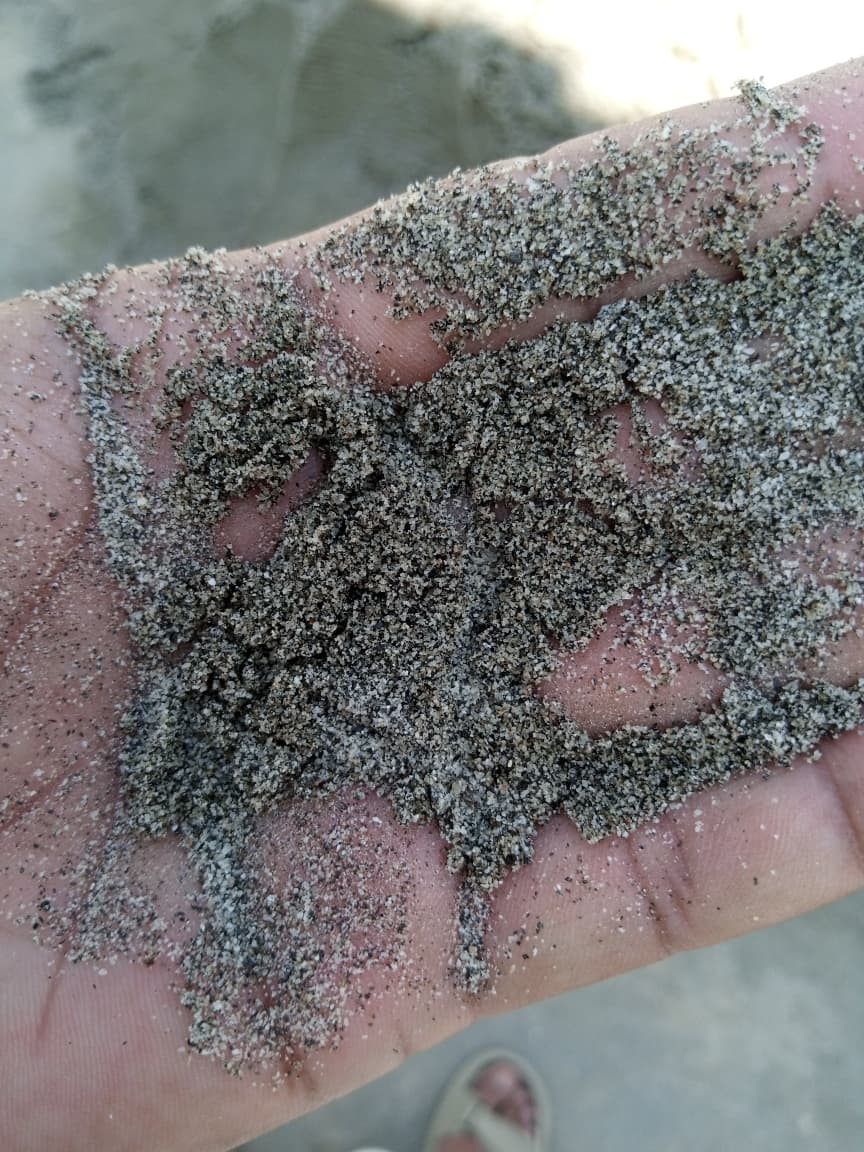
Sand is one of the most overlooked materials on a site, and one of the most important. In Islamabad the weather swings between heavy monsoon rain, long humid spells and intense summer heat, and plaster sand has to cope with all of it. This guide explains in practical terms why Ghazi Sand tends to suit plaster work on Islamabad sites.
What is Ghazi Sand?
Ghazi Sand is a natural sand from the Ghazi region near Tarbela Dam, where the Indus River has deposited and naturally sorted sediment over a very long time. Water moving over river sand of this kind tends to carry away a portion of the finer clay and silt that would otherwise stay mixed in.
It is a fine aggregate used for cement plaster and mortar, the layer applied over brickwork or blockwork before painting or finishing. It is not intended for structural concrete, which calls for coarser aggregate. Contractors in Pakistan commonly choose river sand over pit sand for plastering because the grading tends to be more uniform, which affects how it behaves once mixed with cement and water.
Quick answers
- What is Ghazi Sand? A natural river sand from the Ghazi region near Tarbela Dam along the Indus, used mainly as a fine aggregate in cement plaster and mortar.
- Why is river sand preferred for plaster? It can suit plastering when it has appropriate grading and acceptable levels of dust, clay and other impurities. Suitability depends on project requirements and material quality.
- Why does clay cause plaster cracks? Clay absorbs moisture and swells, then shrinks as it dries. Repeated movement inside the plaster creates stress that shows up as hairline cracks or detachment.
- What makes good plaster sand? Low dust and clay, consistent grading and minimal organic impurities, all of which affect bonding and finish.
1. Clean and comparatively low in dust
Before approving a delivery, a site engineer checks how much silt and dust is mixed in. Silt does not bond well with cement paste, so sand with too much fine dust adds bulk without adding strength. Because of its river origin, Ghazi Sand generally has less dust than sand dug from unregulated inland pits, which helps give a denser, more consistent mix and reduces on-site screening.
2. Comparatively low in mud and clay
Clay is a quietly damaging contaminant. It swells with water and shrinks as it dries, and that cycle repeats every time a wall goes through wet and dry weather, often during Islamabad’s rains. Over months and years the stress tends to show as hairline cracks and eventually as plaster separating from the brickwork. It is one of the more common causes of premature plaster failure in humid conditions. Ghazi Sand’s river origin means it generally carries less mud and clay than typical pit sand.
3. A more consistent, workable texture
Irregular particle size or coarse impurities make it hard to lay a smooth, even coat, and an uneven base affects how putty and paint adhere. Because Ghazi Sand tends to have more consistent grading, masons generally find it easier to get an even surface straight off the trowel.
4. A smoother base can reduce finishing work
Putty fills surface irregularities before distemper or paint, and it costs considerably more per square foot than plaster. The rougher the plaster, the more putty is usually needed. The amount depends on plaster thickness, workmanship, surface preparation and the finish wanted, but contractors using well-graded sand like Ghazi Sand often report using comparatively less putty to reach the same result.
5. Bond strength with cement
Plaster is a mechanical and chemical bond between cement paste and sand particles, and it is only as strong as the sand allows. Dust and clay coatings on grains create a weak layer between paste and sand, which can reduce bond strength and, over time, the strength of the cured plaster. Cleaner, consistently graded sand lets cement paste fill the voids between grains more efficiently, supporting a denser plaster that resists vibration, minor movement and temperature change.
6. Moisture behaviour in Islamabad’s climate
Islamabad and the wider Potohar region have a real monsoon season, long humid stretches and then months of heat. Sand containing clay or organic contamination absorbs humidity and rainwater, swells slightly and contracts again as it dries. Repeated year after year, that movement is a documented contributor to micro-cracking and eventually blistering or detachment in rain-heavy regions. Because Ghazi Sand is comparatively low in these reactive impurities, plaster made with it tends to show less moisture-driven movement.
Ghazi Sand vs ordinary pit sand
| Property | Ordinary pit sand | Ghazi Sand |
|---|---|---|
| Dust content | Often high, requires screening | Comparatively low due to natural washing |
| Clay / mud content | Frequently present, sometimes significant | Comparatively low due to river origin |
| Particle grading | Often inconsistent | Generally more uniform |
| Plaster finish | Can be rough and uneven | Generally smoother and more workable |
| Putty before paint | Often higher to compensate | Often lower with a smoother base |
| Cement bond | Can be weakened by dust and clay | Generally stronger with fewer impurities |
| Moisture behaviour | More prone to clay-driven movement | Less prone due to lower clay content |
| Long-term durability | Higher risk of cracking and detachment | Lower risk when other application factors are equal |
Note: actual performance also depends on correct mix ratios, application technique, curing and site conditions. Sand quality is one important factor among several.
Where we deliver
Ghazi Sand is supplied to residential and commercial projects across Islamabad and Rawalpindi, including DHA Islamabad, Bahria Town, Gulberg Greens, B-17, Faisal Hills, Taxila, Wah Cantt and Tarnol. Quantities and scheduling depend on project size and site access, so contact us ahead of your plastering phase. See delivery areas, or contact us for delivery charges to your location.
The bottom line
When engineers and contractors choose sand, they are not just pricing a truckload. They are considering how the wall will hold up over the next several years. Sand with high dust or clay may look the same on delivery day, but the cost tends to appear later as cracked plaster, peeling paint, higher putty bills and repair callbacks. Ghazi Sand addresses several of these concerns at the source: comparatively low in dust, mud and clay, generally easier to work to a smooth finish, and often lighter on putty. For projects across Islamabad and nearby areas, it is a practical choice to consider.
Frequently asked questions
Is river sand better than pit sand for plaster work?
Generally, for plastering, yes. River sand tends to have lower clay content and more rounded, naturally sorted grains, which usually improves workability and reduces cracking risk compared with unwashed pit sand.
Which sand is best for plaster?
Fine-grained, consistently graded sand that is low in dust, clay and organic impurities. These properties support better bonding, a smoother finish and lower long-term maintenance.
Does clay in sand actually cause cracks?
Yes. Clay expands and contracts as it absorbs and releases moisture, and over time that internal movement shows up as hairline cracks or plaster separation.
Can Ghazi Sand be used for indoor plastering?
Yes. It is commonly used for interior plaster where a smooth, paintable finish and lower putty use are priorities.
Can Ghazi Sand be used for exterior plastering?
Yes. Its comparatively low clay content is particularly relevant outdoors, where walls face monsoon rain, humidity and seasonal heat.
How much sand is typically needed to plaster a house?
It varies with plaster thickness, wall area and mix ratio. Our estimation guide explains it with calculations.
Does Ghazi Sand need to be screened before use on site?
Because it is naturally washed and graded at the source, it generally needs less on-site screening than pit sand, though individual site practices and mix requirements vary.
Is Ghazi Sand available for delivery in Rawalpindi?
Yes. Delivery is arranged for Islamabad, Rawalpindi and surrounding areas including DHA Islamabad, Bahria Town, Gulberg Greens, B-17, Faisal Hills, Taxila, Wah Cantt and Tarnol.
How is delivery arranged and scheduled?
Contact the supplier to confirm quantity, site location and timeline, then receive a quotation and a scheduled delivery date.
Why does sand cleanliness matter so much for plaster quality?
Clean sand bonds more effectively with cement, gives a smoother finish and is less prone to moisture-driven movement that leads to cracking, so it is a foundational factor in how long plaster lasts.
Getting started
If you are planning plaster work in Islamabad, Rawalpindi or nearby and want to talk through quantities, timelines or site conditions, call or WhatsApp +92 318 5907006. Sharing your project size and location up front makes it easier to give an accurate quotation.
